
Author:

Branded Photo Booth for Corporate Events: Planning Guide

Branded Photo Booth for Corporate Events: Planning Guide


Warning: Attempt to read property "ID" on false in /home/u862242046/domains/phillyphotobooths.com/public_html/wp-content/themes/yootheme-1/packages/theme-wordpress/functions.php on line 83

Warning: Attempt to read property "display_name" on false in /home/u862242046/domains/phillyphotobooths.com/public_html/wp-content/themes/yootheme-1/packages/theme-wordpress/functions.php on line 85

Corporate planners booking a photo booth for a conference, product launch, or campus event usually run into the same gap: most vendor sites talk about props and prints but say almost nothing about brand assets, overlay approvals, or the paperwork procurement will ask for. A branded photo booth for corporate events involves all three, and buyers who plan for them upfront avoid delays in the week before setup day.

What Makes a Photo Booth “Branded” vs. Just Rented

A standard photo booth rental gives guests a generic template, a set of props, and a print with no company identity on it. A branded activation replaces that generic template with the company’s logo, colors, and event messaging on every print and digital share. The difference isn’t cosmetic. A rented booth is an entertainment add-on. A branded one is a marketing asset that reinforces the event’s messaging in every photo guests take home or post online.

Custom Overlay Photo Booth Basics

The overlay is the graphic layer placed around the photo: the frame, footer, and any decorative elements that carry brand identity. A custom overlay photo booth setup typically layers three elements: a logo lockup, a color-matched frame, and event-specific text such as a date, hashtag, or campaign name. Vendors build this overlay as a template file sized to match the booth’s print output, so the design has to be finalized before the event, not adjusted on-site.

Where Logo Placement Actually Matters

Logo placement affects both legibility and brand compliance. Placing a logo too close to the photo subject can obscure faces or crop awkwardly depending on group size. Most enterprise brand guidelines specify a minimum clear space and a preferred corner or footer position for lockups, and a vendor experienced with corporate accounts will ask for that guidance rather than guessing. Getting this right on the first proof matters more than it seems. Reprints or last-minute overlay edits eat into setup time on event day.

Building Your Brand Kit Before You Book

Vendors can’t build an accurate overlay without the right source files. A brand kit assembled before booking speeds up approval and avoids back-and-forth in the days leading up to the event.

Assets to Send the Vendor

A complete brand kit for a corporate branding event photo project usually includes:

  • Vector logo files (EPS, AI, or high-resolution PNG with transparent background)
  • Brand color codes in hex or Pantone format
  • Approved fonts or a style guide referencing them
  • Any required legal marks, taglines, or event hashtags
  • A reference image or prior overlay example, if one exists

Common Brand Guideline Pitfalls

The most common delay is sending a low-resolution logo pulled from a website or slide deck, which prints blurry or pixelated on a physical strip. Another frequent issue is skipping the approval workflow: someone in marketing signs off on the overlay design, but legal or brand compliance never sees it, and changes surface the week of the event. Planners should confirm internally who has final sign-off before sending assets to the vendor, so the proof cycle only needs one round.

Overlay and Print Options for Different Event Types

Not every event needs the same overlay or print format. The right choice depends on how many people will use the booth, how fast prints need to turn around, and whether the goal is lead capture or internal morale.

Logo Photo Booth Prints for Conferences and Trade Shows

At conferences and trade shows, logo photo booth prints work best as a compact strip or postcard-size print that guests can carry around the show floor. A branded print in someone’s hand functions as a walking reminder of the booth. A layered overlay setup, with the logo lockup in a fixed corner, a brand color frame, and an event hashtag footer, lets a single template scale across a multi-day conference without reprinting for each session. For exhibitors focused on booth traffic and follow-up, using a photo booth for trade show lead generation pairs the branded print with a data capture step, so the activation does double duty as both engagement and pipeline.

Company Logo Photo Strip for Employee and Campus Events

Internal events, like employee appreciation days or campus recruiting fairs, tend to favor a company logo photo strip with a lighter overlay, often just a logo and event date, without heavy marketing copy. The goal here is closer to team morale and culture reinforcement than lead generation, so overlays can be simpler and print runs faster since there’s no need for QR-driven data capture on every strip.

Brand Activation Photo Booth Features That Drive Engagement

A brand activation photo booth earns its cost back through measurable engagement, not just entertainment value. Two features do most of that work: digital sharing and add-on activations that extend the photo beyond the print itself.

Digital Sharing and Post-Event Galleries

Instant digital delivery, via text, email, or a shareable link, lets guests post their branded photo to social channels immediately, extending the activation’s reach past the event floor. Branded photo activations are consistently among the highest-engagement booth elements at trade shows and conferences, since guests self-select into sharing the branded print or digital image with their own networks rather than being asked to. A post-event gallery, hosted and shared with attendees afterward, gives the brand a second engagement touchpoint days after the event ends.

AI Activation Add-Ons

Some vendors now offer AI-driven add-ons, such as automated background swaps or styled photo templates, layered on top of the same branded overlay. These features are worth asking about during vendor selection, but they should never come at the expense of overlay accuracy or logo placement. The brand elements are the deliverable procurement is paying for, and any add-on should support that, not distract from it.

Procurement Checklist for Corporate Buyers

This is the section most vendor pages skip, and it’s often where bookings actually stall. Corporate procurement and legal teams typically need a specific document set before they’ll clear a vendor, and asking for it early avoids a scramble the week before the event.

Documents to Request Before Setup Day

Full-service vendors typically supply a certificate of insurance (COI), a completed W-9, and a signed vendor agreement before setup day so that in-house procurement and legal teams can clear the activation without back-and-forth. Planners should also request:

  • A formal invoice or quote outlining line-item costs
  • Confirmed staffing details (attendant count, arrival time, load-in requirements)
  • A written cancellation or rescheduling policy
  • Overlay proof sign-off, in writing, before print production begins

Questions to Ask Vendors on the Discovery Call

Before booking, it’s worth confirming a few things directly with the vendor:

  • Can you provide a COI naming our venue as additionally insured, and how quickly?
  • What’s your standard turnaround for overlay proofs and revisions?
  • Do you invoice net-30, or require a deposit and balance schedule?
  • Who’s on-site the day of the event, and what’s the backup plan if equipment fails?
  • Have you worked with enterprise brand guidelines or legal review processes before?

A vendor that answers these clearly, without hedging, is generally set up to work inside a corporate procurement process rather than around it. A corporate photo booth rental planning guide can help Philadelphia-area planners map these logistics against venue requirements and lead times specific to the region.

Choosing a Vendor for Multi-Site or Recurring Activations

Companies running a branded photo booth across multiple offices, campus locations, or a recurring conference series need a vendor who can maintain one brand kit and one overlay standard across every stop. That means centralizing brand asset approval once, then reusing the same template and print specs at each site instead of re-approving the overlay for every event. It also means confirming the vendor has the staffing and equipment capacity to cover multiple dates or locations without gaps in service.

Philly Photo Booths has executed branded activations for institutions including Penn Medicine, Villanova, Merck, Urban Outfitters, and the Philadelphia Museum of Art. That work has meant operating inside enterprise brand guidelines and procurement steps across a range of industries and event scales. For a company evaluating a branded photo booth for corporate events, whether it’s a single conference or a recurring multi-site program, the next step is requesting a quote that includes brand-kit setup, overlay proofing, and the procurement paperwork, COI, W-9, and invoicing, needed to clear internal approval without delay.
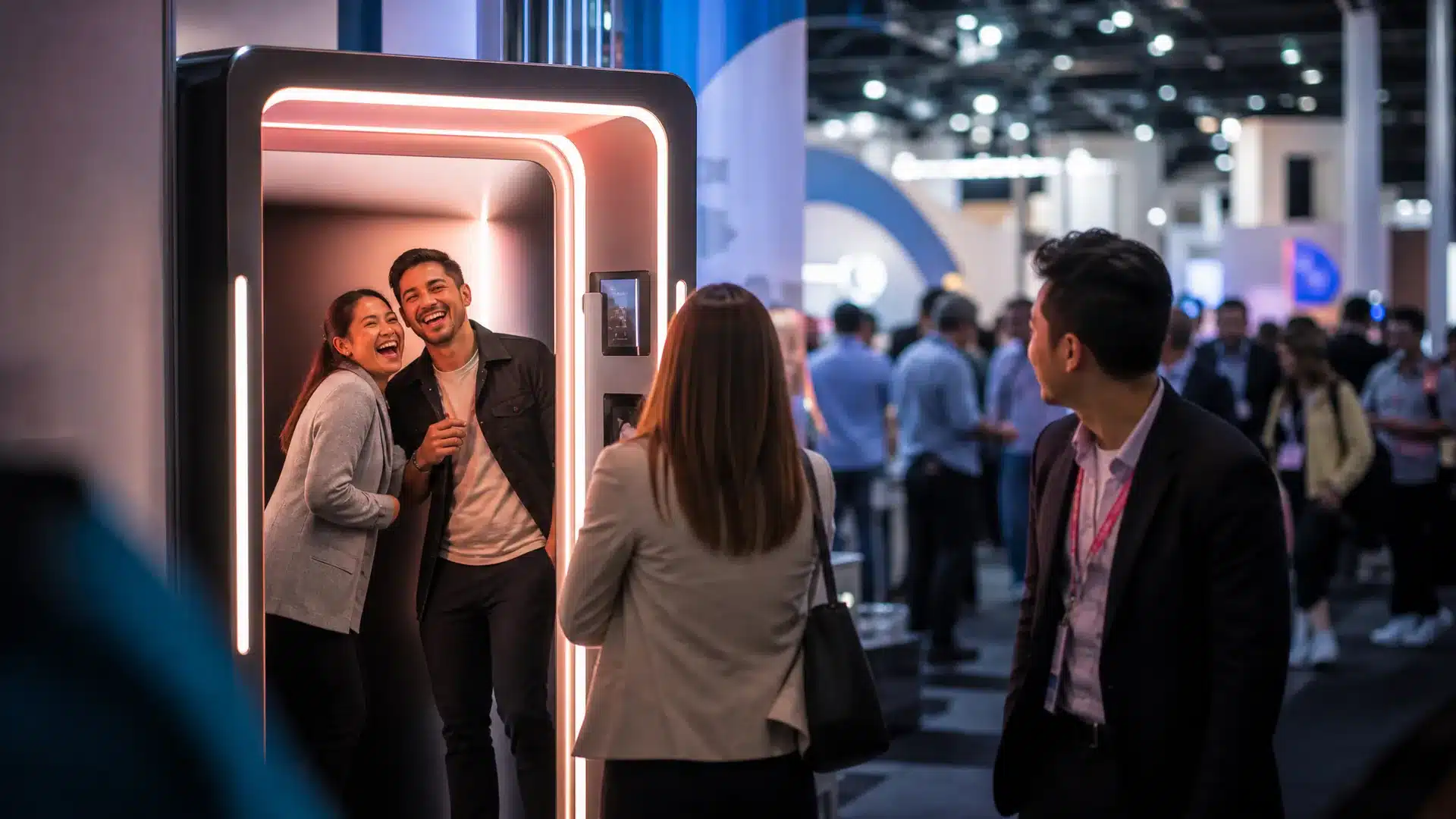
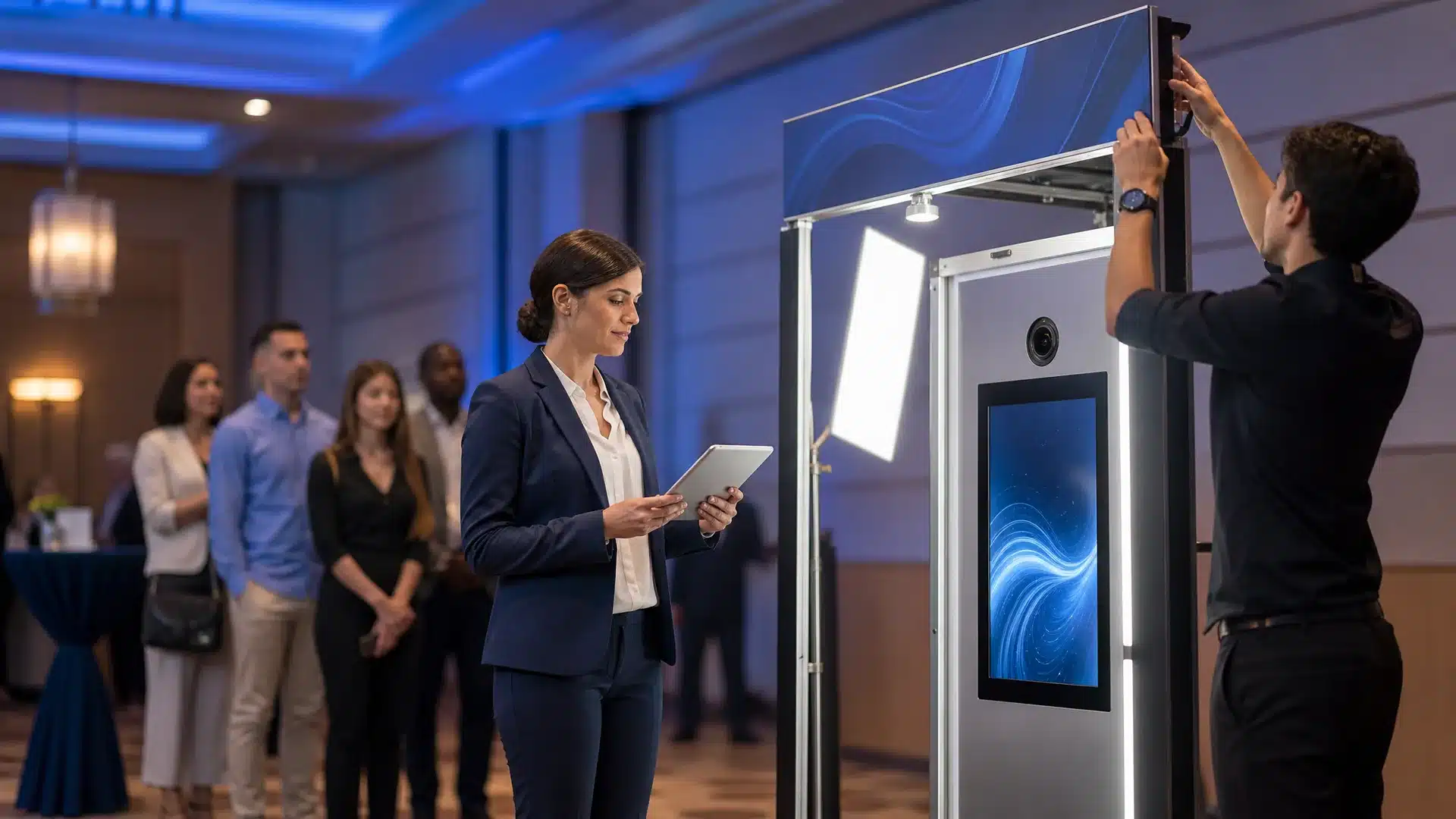
Photo Booth for Trade Show Booth: Lead Gen Guide

Photo Booth for Trade Show Booth: Lead Gen Guide


Warning: Attempt to read property "ID" on false in /home/u862242046/domains/phillyphotobooths.com/public_html/wp-content/themes/yootheme-1/packages/theme-wordpress/functions.php on line 83

Warning: Attempt to read property "display_name" on false in /home/u862242046/domains/phillyphotobooths.com/public_html/wp-content/themes/yootheme-1/packages/theme-wordpress/functions.php on line 85

Trade show aisles are crowded with banners, brochures, and staff trying to wave attendees over. A photo booth for trade show booth activations cuts through that noise because it gives people a reason to stop, not just a reason to look. Instead of another handout that ends up in a hotel trash can, a photo booth turns a five-second glance into an actual interaction. That interaction can be tracked, followed up on, and tied back to a lead.

Why a Photo Booth Is One of the Best Trade Show Engagement Ideas

Attendees walking a trade show floor make split-second decisions about which booths deserve their time. Most exhibits rely on static signage, tabletop displays, or a rep repeating the same pitch. A photo booth changes the equation by giving passersby something to watch, and something they want to participate in.

What Makes Booth Traffic Ideas Actually Work at Crowded Conferences

Dwell time at a typical trade show booth is short. Attendees are managing a packed agenda, so they filter out anything that looks like a sales pitch. Interactive, visual activations work because they don’t feel like a pitch at first. They feel like an activity.

A branded photo booth placed at the front of a trade show booth acts as a visual anchor. Attendees notice the activity and camera flashes from across the aisle, and that pulls in walk-by traffic that a static banner stand can’t generate. People are drawn to other people having a good time, and a photo booth creates a small, visible moment of fun in an otherwise transactional environment. Give people something to watch before you ask them for anything.

From Photo Moment to Sales Lead: How Trade Show Lead Generation Photo Booth Setups Work

A photo booth only earns its place in a marketing budget if it does more than entertain. The mechanics matter here, and they’re straightforward once the setup is right.

At the kiosk, guests enter an email address or phone number to receive their photo. That single step, done at the moment of highest engagement, is what makes a trade show lead generation photo booth different from a bowl of business cards at the front table. The attendee is opting in while they’re already interested, not being asked cold.

Capturing Contact Info Through Digital Sharing and Galleries

Once a guest shares their contact details, the photo (or GIF, boomerang, or short video, depending on the setup) can be delivered instantly by text or email. Post-event digital galleries and instant digital sharing let exhibitors capture attendee emails at the point of engagement, turning a photo moment into a trackable lead record tied directly to that booth visit. Those records can be exported and handed to sales or marketing teams for follow-up, with a built-in reason for the first outreach: “Here’s your photo from our booth.”

Branded Prints as a Takeaway That Keeps Your Booth Top of Mind

Digital capture handles the lead data, but a physical print still matters. A branded print, with a company logo, tagline, or event hashtag on the border, is a takeaway that travels back to the attendee’s hotel room, desk, or fridge. It’s a low-cost impression that keeps a company’s name in front of a prospect long after the show floor lights go down.

Designing a Conference Booth Activation That Fits Your Space and Brand

A photo booth needs to fit the physical realities of a trade show floor, and it needs to look like it belongs to the brand hosting it, not like a rented add-on.

Booth Footprint, Guest Flow, and High-Volume Staffing Considerations

Booth footprints at trade shows vary widely, from a 10×10 corner space to a sprawling 20×30 island. A photo booth activation has to be sized to the footprint without blocking sightlines to the rest of the exhibit or creating a bottleneck at peak traffic hours.

Guest flow planning matters as much as square footage. The booth should have a clear entry and exit path so a line doesn’t spill into the aisle or block neighboring exhibitors. Staffing for peak hours is equally important. An attendant who can keep the line moving, troubleshoot the kiosk, and prompt guests to share their contact info is what separates a smooth activation from a stalled one.

Philly Photo Booths has staffed high-volume branded activations for institutions like Penn Medicine, Merck, and Villanova. That’s direct experience managing dense trade show and conference crowds without bottlenecking booth flow, and it matters most during the busiest hour of a show, when a poorly staffed booth turns interested attendees away.

Custom Overlays, Backdrops, and Brand Assets

A conference booth activation should look like an extension of the exhibit, not a rented novelty sitting next to it. That means custom overlays on every photo, a backdrop that matches the booth’s color scheme, and props or signage that reinforce the brand message rather than distract from it. Exhibitors can supply logo files and brand guidelines ahead of time so every print and digital share reflects the same visual identity used across the rest of the booth.

Choosing Between Photo Booth Formats for Exhibit Booth Attraction

Not every trade show floor calls for the same equipment. Booth size, aisle traffic, and the overall tone of the event all factor into which format works best.

Open-Air Booths vs. AI Photo Activations for Trade Shows

Open-air booths are the traditional choice: a camera on a stand, a backdrop, and open space for groups to gather in front of the lens. They work well in high-traffic aisles because they’re easy to spot from a distance and can handle a steady stream of guests without much friction.

AI photo activations are a newer option that use generative or AI-enhanced effects to create stylized images, digital overlays, or themed transformations instead of a straightforward backdrop photo. These tend to suit more curated spaces, such as a sponsor lounge or a smaller booth focused on a specific product launch, where the novelty of the technology itself becomes part of the draw. For a busy exhibit hall aisle, an open-air setup is usually the more dependable choice; for a boutique activation meant to generate buzz, an AI-driven format can add differentiation.

Procurement, Logistics, and Measuring ROI for Your Trade Show Photo Booth

Booking a photo booth for a trade show booth is a vendor decision, and vendor decisions come with procurement requirements. Planners who get this paperwork sorted early avoid last-minute scrambling before the show.

What Event Planners Need for Compliance (COI, W-9, Invoicing)

Convention centers and venue management companies typically require a certificate of insurance (COI) before any outside vendor can set up equipment on-site. Finance and procurement teams will also usually need a W-9 on file, along with a clear invoice structure for budgeting and reimbursement.

Because Philly Photo Booths handles COI, W-9, and invoicing paperwork upfront, procurement and event marketing teams can add a booth activation to a trade show budget without last-minute compliance delays. Planners juggling a dozen vendors for a single show benefit from a partner who already knows what a venue’s compliance office will ask for.

Tracking Engagement and Leads After the Show

The most useful part of a photo booth activation happens after the show ends. Post-event reporting can include the total number of photos taken, digital shares, gallery page views, and, most importantly, the list of captured contact records tied to the booth. Exhibitors consistently report that interactive attractions like photo booths keep attendees at a booth roughly two to three times longer than a booth with no activation, which gives staff more time to qualify leads face-to-face while the photo experience is happening.

That combination of quantitative data (leads captured, shares, gallery traffic) and qualitative feedback (longer conversations, better recall of the brand) gives stakeholders a concrete way to measure ROI instead of relying on a vague sense that “the booth felt busy.” For a company weighing conference booth activation options against a fixed marketing budget, that reporting is what justifies the line item next year.

A photo booth for trade show booth use is no longer a novelty add-on. It’s a measurable lead generation tool when the capture mechanics, staffing, and paperwork are handled correctly. Planners evaluating options for an upcoming show, including those looking into corporate photo booth rental in Philadelphia, can request a quote from Philly Photo Booths to design a branded activation built around booth traffic ideas that convert into actual sales leads, not just photos.

A woman with a tablet stands near a digital kiosk from a corporate photo booth rental Philadelphia provider as a man adjusts it, while several people wait in line behind her in a modern, well-lit event space.

Corporate Photo Booth Rental Philadelphia: Event Planning Guide


Warning: Attempt to read property "ID" on false in /home/u862242046/domains/phillyphotobooths.com/public_html/wp-content/themes/yootheme-1/packages/theme-wordpress/functions.php on line 83

Warning: Attempt to read property "display_name" on false in /home/u862242046/domains/phillyphotobooths.com/public_html/wp-content/themes/yootheme-1/packages/theme-wordpress/functions.php on line 85

Booking a photo booth for a company event isn’t the same job as booking one for a wedding, even though most Philadelphia rental sites are built around the latter. A corporate photo booth rental Philadelphia planners can rely on has to solve for brand consistency, staffing reliability, and paperwork readiness, not romantic backdrops and guestbook prints. This guide walks through what to evaluate before signing a contract, what compliance documents to expect, and how to match a vendor to the scale of a conference, trade show, or campus event.

Why Corporate Buyers Need a Different Photo Booth Vendor Than Weddings

Search for a photo booth rental in Philadelphia and most results lead with floral backdrops, guestbook add-ons, and wedding package tiers. That’s a reasonable default for the bridal market, but it leaves corporate planners without a clear procurement path. A marketing director booking a trade show activation or an HR team planning an employee appreciation event needs something different: a vendor who understands brand guidelines, insurance requirements, and high-volume guest flow.

What sets a corporate event photo booth apart from a wedding rental

A wedding booth is judged on charm. A corporate booth is judged on execution. That means custom overlays that match a company’s logo and color palette exactly, staff who can manage a line of 50 conference attendees between sessions, and a vendor who can produce a certificate of insurance without a follow-up email. The deliverables differ too. A bride wants printed keepsakes. A brand manager wants a digital gallery she can pull assets from for a recap post the next morning. Any professional photo booth for company events should be built around that second set of expectations from the start.

What to Look For in a Branded Photo Booth Company in Philadelphia

Not every rental company advertised as a Philadelphia event photo booth provider is set up to serve corporate clients. The evaluation criteria are different, and it’s worth asking pointed questions before requesting a proposal.

Custom overlays and brand asset matching

The overlay is the first thing a guest sees, and it’s often the first thing a brand’s internal stakeholders will scrutinize. A branded photo booth company in Philadelphia should be able to take a company’s existing brand guidelines (logo files, hex codes, approved fonts) and build an overlay that looks like an extension of the marketing team’s own work, not a generic template with a logo dropped in the corner. Full-service setup typically includes custom overlays built to a company’s brand guidelines, on-site staffing for guest flow management, and delivery of a post-event digital gallery for internal use or social sharing. Ask to see prior corporate work before assuming a vendor can match a specific brand identity. Wedding samples alone won’t tell you that.

On-site staffing and guest flow for high-traffic events

Weddings rarely need to move more than 100 guests through a booth in an evening. Conferences and trade shows can push that volume through in a single afternoon session. A vendor should be able to describe, specifically, how staff manage lines, how equipment is configured for faster throughput, and what happens if a session runs long. Experience matters here. A company that has staffed activations for large institutional clients has already solved the guest-flow problem at scale, which cuts the risk of a bottleneck during a keynote break.

Procurement and Compliance Checklist for Event Activation Vendors

Corporate event planners increasingly treat activation vendors like any other procurement line item. A certificate of insurance, a signed W-9, and predictable invoicing are expected before a contract is approved, not requested after the fact.

Certificates of insurance, W-9s, and invoicing expectations

Before signing, confirm the vendor can readily provide:

  • A certificate of insurance (COI) naming the company and, if required, the venue as additional insured
  • A completed W-9 for tax and vendor-onboarding purposes
  • Invoicing that matches a purchase order process, rather than requiring upfront payment via personal card or informal transfer

An event activation company Philadelphia planners haven’t worked with before should be able to produce all three without delay. If a vendor hesitates or can’t explain their insurance coverage clearly, keep looking.

Working with venue and campus requirements

Hospitals, universities, and corporate campuses often layer their own vendor vetting on top of standard COI and W-9 requests: background checks for staff, loading dock scheduling, badge access, facilities sign-off. This is precisely where prior institutional experience matters. Philly Photo Booths has staffed branded activations for organizations including Penn Medicine, Villanova, Merck, Urban Outfitters, and the Philadelphia Museum of Art, giving it direct experience with the extra procurement and compliance steps those environments require. A vendor who has already navigated a hospital’s vendor credentialing process is far less likely to cause a delay on event day.

Photo Booth Rental for Conferences, Trade Shows, and Campus Events in Philadelphia

Different corporate buyers use a photo booth for different reasons, and the right setup depends on the use case.

Trade show booth traffic and lead capture opportunities

A marketing team running a trade show booth is usually trying to draw foot traffic and extend dwell time. A conference booth station can be configured to capture a badge-scan style guest flow, matched to brand colors, and produce a same-day digital gallery for the marketing team to pull assets from. That gallery becomes a practical asset for follow-up email campaigns, social recaps, or a post-show report to leadership showing engagement.

Employee engagement events and internal galleries

HR and internal communications teams have a different goal: employee morale and participation, not lead generation. For an all-hands meeting, holiday party, or milestone celebration, the deliverable that matters most is a digital gallery employees can access themselves, share on their own social channels, or pull into an internal recap. Corporate event rentals Philadelphia companies choose for internal events should be able to deliver that gallery quickly, ideally within a day or two of the event, so the moment doesn’t lose momentum.

AI Activations and Digital Deliverables for Modern Corporate Events

Standard print booths still have their place, but event planners in 2026 are increasingly asking about AI-powered activations as a way to differentiate an event from previous years. These can include AI-generated backdrops, stylized portrait effects, or interactive digital experiences that guests can share instantly from their phones without waiting in a print line. For a brand team, this opens up creative options beyond a static overlay: a themed AI filter tied to a product launch, for example, or a digital effect that matches a campaign’s visual identity. The common thread across these formats is speed of delivery. Instant digital sharing, same-day galleries, and assets the marketing team can use immediately rather than days later.

How to Book a Professional Photo Booth for Your Company Event in Philadelphia

Corporate events are usually planned months in advance, and photo booth vendors with strong institutional experience get booked early, especially during busy conference and gala seasons in spring and fall. As a general rule, planners should reach out at least four to six weeks ahead for a straightforward internal event, and as early as possible, ideally two to three months out, for large conferences, trade shows, or multi-day activations that require additional compliance paperwork and staffing coordination.

Questions to ask before signing a contract

Before committing to a vendor, event planners should confirm:

  • Can you provide a COI and W-9 in advance of the event date?
  • What does your invoicing process look like for a purchase-order-based approval?
  • How will overlays be matched to our brand guidelines, and how many revisions are included?
  • How many staff will be on-site, and how is guest flow managed at high volume?
  • What digital deliverables (galleries, instant sharing links, recap assets) are included, and how quickly are they delivered after the event?
  • Do you have experience working within venue-specific vendor requirements, such as a hospital, university, or corporate campus?

A vendor who can answer all six clearly and quickly is signaling the kind of predictability corporate planners need. For a Philadelphia event photo booth built around brand consistency, compliance readiness, and dependable execution, requesting a quote is the logical next step. Philly Photo Booths works directly with event planners, marketing teams, and campus administrators across Philadelphia to scope staffing, branding, and paperwork before the contract stage. Reach out to request a quote and start the conversation for an upcoming corporate activation.

Call Now