
Photo Booth for Trade Show Booth: Lead Gen Guide
Warning: Attempt to read property "ID" on false in /home/u862242046/domains/phillyphotobooths.com/public_html/wp-content/themes/yootheme-1/packages/theme-wordpress/functions.php on line 83
Warning: Attempt to read property "display_name" on false in /home/u862242046/domains/phillyphotobooths.com/public_html/wp-content/themes/yootheme-1/packages/theme-wordpress/functions.php on line 85
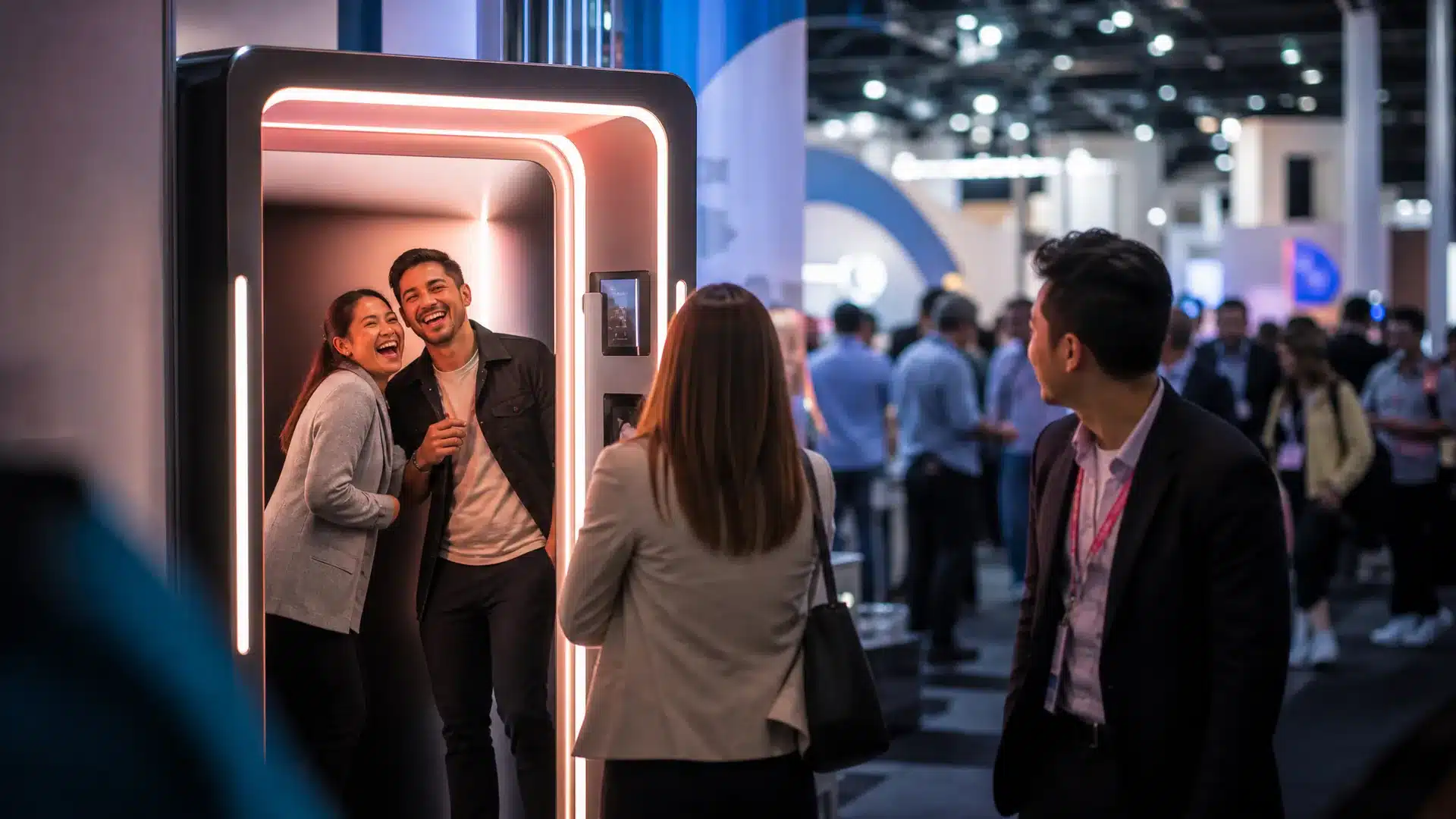
Trade show aisles are crowded with banners, brochures, and staff trying to wave attendees over. A photo booth for trade show booth activations cuts through that noise because it gives people a reason to stop, not just a reason to look. Instead of another handout that ends up in a hotel trash can, a photo booth turns a five-second glance into an actual interaction. That interaction can be tracked, followed up on, and tied back to a lead.
Why a Photo Booth Is One of the Best Trade Show Engagement Ideas
Attendees walking a trade show floor make split-second decisions about which booths deserve their time. Most exhibits rely on static signage, tabletop displays, or a rep repeating the same pitch. A photo booth changes the equation by giving passersby something to watch, and something they want to participate in.
What Makes Booth Traffic Ideas Actually Work at Crowded Conferences
Dwell time at a typical trade show booth is short. Attendees are managing a packed agenda, so they filter out anything that looks like a sales pitch. Interactive, visual activations work because they don’t feel like a pitch at first. They feel like an activity.
A branded photo booth placed at the front of a trade show booth acts as a visual anchor. Attendees notice the activity and camera flashes from across the aisle, and that pulls in walk-by traffic that a static banner stand can’t generate. People are drawn to other people having a good time, and a photo booth creates a small, visible moment of fun in an otherwise transactional environment. Give people something to watch before you ask them for anything.
From Photo Moment to Sales Lead: How Trade Show Lead Generation Photo Booth Setups Work
A photo booth only earns its place in a marketing budget if it does more than entertain. The mechanics matter here, and they’re straightforward once the setup is right.
At the kiosk, guests enter an email address or phone number to receive their photo. That single step, done at the moment of highest engagement, is what makes a trade show lead generation photo booth different from a bowl of business cards at the front table. The attendee is opting in while they’re already interested, not being asked cold.
Capturing Contact Info Through Digital Sharing and Galleries
Once a guest shares their contact details, the photo (or GIF, boomerang, or short video, depending on the setup) can be delivered instantly by text or email. Post-event digital galleries and instant digital sharing let exhibitors capture attendee emails at the point of engagement, turning a photo moment into a trackable lead record tied directly to that booth visit. Those records can be exported and handed to sales or marketing teams for follow-up, with a built-in reason for the first outreach: “Here’s your photo from our booth.”
Branded Prints as a Takeaway That Keeps Your Booth Top of Mind
Digital capture handles the lead data, but a physical print still matters. A branded print, with a company logo, tagline, or event hashtag on the border, is a takeaway that travels back to the attendee’s hotel room, desk, or fridge. It’s a low-cost impression that keeps a company’s name in front of a prospect long after the show floor lights go down.
Designing a Conference Booth Activation That Fits Your Space and Brand
A photo booth needs to fit the physical realities of a trade show floor, and it needs to look like it belongs to the brand hosting it, not like a rented add-on.
Booth Footprint, Guest Flow, and High-Volume Staffing Considerations
Booth footprints at trade shows vary widely, from a 10×10 corner space to a sprawling 20×30 island. A photo booth activation has to be sized to the footprint without blocking sightlines to the rest of the exhibit or creating a bottleneck at peak traffic hours.
Guest flow planning matters as much as square footage. The booth should have a clear entry and exit path so a line doesn’t spill into the aisle or block neighboring exhibitors. Staffing for peak hours is equally important. An attendant who can keep the line moving, troubleshoot the kiosk, and prompt guests to share their contact info is what separates a smooth activation from a stalled one.
Philly Photo Booths has staffed high-volume branded activations for institutions like Penn Medicine, Merck, and Villanova. That’s direct experience managing dense trade show and conference crowds without bottlenecking booth flow, and it matters most during the busiest hour of a show, when a poorly staffed booth turns interested attendees away.
Custom Overlays, Backdrops, and Brand Assets
A conference booth activation should look like an extension of the exhibit, not a rented novelty sitting next to it. That means custom overlays on every photo, a backdrop that matches the booth’s color scheme, and props or signage that reinforce the brand message rather than distract from it. Exhibitors can supply logo files and brand guidelines ahead of time so every print and digital share reflects the same visual identity used across the rest of the booth.
Choosing Between Photo Booth Formats for Exhibit Booth Attraction
Not every trade show floor calls for the same equipment. Booth size, aisle traffic, and the overall tone of the event all factor into which format works best.
Open-Air Booths vs. AI Photo Activations for Trade Shows
Open-air booths are the traditional choice: a camera on a stand, a backdrop, and open space for groups to gather in front of the lens. They work well in high-traffic aisles because they’re easy to spot from a distance and can handle a steady stream of guests without much friction.
AI photo activations are a newer option that use generative or AI-enhanced effects to create stylized images, digital overlays, or themed transformations instead of a straightforward backdrop photo. These tend to suit more curated spaces, such as a sponsor lounge or a smaller booth focused on a specific product launch, where the novelty of the technology itself becomes part of the draw. For a busy exhibit hall aisle, an open-air setup is usually the more dependable choice; for a boutique activation meant to generate buzz, an AI-driven format can add differentiation.
Procurement, Logistics, and Measuring ROI for Your Trade Show Photo Booth
Booking a photo booth for a trade show booth is a vendor decision, and vendor decisions come with procurement requirements. Planners who get this paperwork sorted early avoid last-minute scrambling before the show.
What Event Planners Need for Compliance (COI, W-9, Invoicing)
Convention centers and venue management companies typically require a certificate of insurance (COI) before any outside vendor can set up equipment on-site. Finance and procurement teams will also usually need a W-9 on file, along with a clear invoice structure for budgeting and reimbursement.
Because Philly Photo Booths handles COI, W-9, and invoicing paperwork upfront, procurement and event marketing teams can add a booth activation to a trade show budget without last-minute compliance delays. Planners juggling a dozen vendors for a single show benefit from a partner who already knows what a venue’s compliance office will ask for.
Tracking Engagement and Leads After the Show
The most useful part of a photo booth activation happens after the show ends. Post-event reporting can include the total number of photos taken, digital shares, gallery page views, and, most importantly, the list of captured contact records tied to the booth. Exhibitors consistently report that interactive attractions like photo booths keep attendees at a booth roughly two to three times longer than a booth with no activation, which gives staff more time to qualify leads face-to-face while the photo experience is happening.
That combination of quantitative data (leads captured, shares, gallery traffic) and qualitative feedback (longer conversations, better recall of the brand) gives stakeholders a concrete way to measure ROI instead of relying on a vague sense that “the booth felt busy.” For a company weighing conference booth activation options against a fixed marketing budget, that reporting is what justifies the line item next year.
A photo booth for trade show booth use is no longer a novelty add-on. It’s a measurable lead generation tool when the capture mechanics, staffing, and paperwork are handled correctly. Planners evaluating options for an upcoming show, including those looking into corporate photo booth rental in Philadelphia, can request a quote from Philly Photo Booths to design a branded activation built around booth traffic ideas that convert into actual sales leads, not just photos.