
AI Photo Booths for Events
Warning: Attempt to read property "ID" on false in /home/u862242046/domains/phillyphotobooths.com/public_html/wp-content/themes/yootheme-1/packages/theme-wordpress/functions.php on line 83
Warning: Attempt to read property "display_name" on false in /home/u862242046/domains/phillyphotobooths.com/public_html/wp-content/themes/yootheme-1/packages/theme-wordpress/functions.php on line 85
Search results for an AI photo booth for events tend to surface consumer novelty apps: filters that turn a selfie into a cartoon, a fantasy avatar, or a retro portrait. Those tools are built for individual fun, not for a 500-person conference with a brand deck, a media team, and a procurement office asking for paperwork. This guide is written for the second group, corporate event planners, marketing teams, and university administrators who need an AI activation experience that behaves like a professional event vendor, not a phone app.
What an AI Photo Booth for Events Actually Delivers
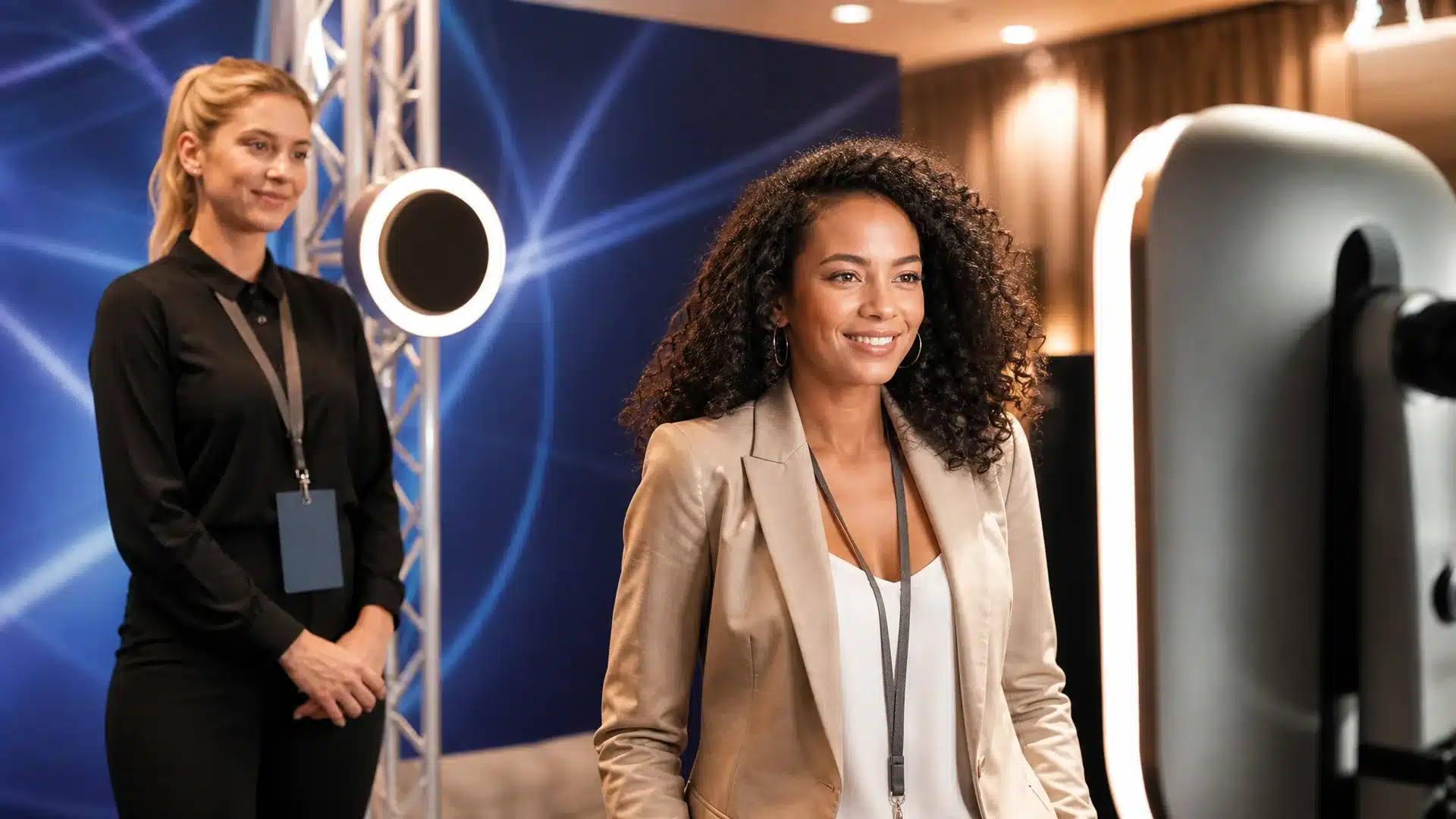
An AI photo booth at a corporate event pairs a physical setup, camera, lighting, backdrop, and an attendant, with generative software that turns each guest’s photo into a stylized output in seconds. Guests step up, pose, and walk away with a branded digital keepsake they can share immediately. The technology is the same class that powers consumer apps. The delivery model is not.
How AI Activation Experiences Differ from Novelty Apps
A novelty app runs on a guest’s own phone, with no oversight, no consistent output quality, and no connection to event branding. A corporate-grade AI activation experience runs on managed hardware with an onsite attendant who keeps the line moving, troubleshoots in real time, and makes sure every output matches an approved template. There’s no risk of a guest generating an off-brand or inappropriate image on a company’s dime, because the creative options are locked to a pre-approved set.
Where AI Photo Generator Event Tech Fits in a Program
This kind of activation typically sits at a registration area, a sponsor pavilion, or a networking reception, anywhere planners want a natural gathering point. It works alongside other engagement tactics rather than replacing them, giving marketing teams one more measurable touchpoint in a broader event program.
Why Corporate Events Choose Interactive Event Technology Over Standard Booths
Standard photo booths still draw a crowd, but interactive event technology built around AI adds a layer of novelty that keeps guests posting and tagging long after the event ends. Planners upgrading from a traditional booth are usually chasing two things: sustained engagement and consistent brand output.
Engagement and Dwell Time at Conferences and Trade Shows
At a trade show, dwell time at a booth is a hard currency. A corporate conference can use an AI photo booth activation to turn attendees into branded digital avatars or stylized keepsakes that they share on LinkedIn within minutes of stepping off the backdrop. That kind of shareable output extends a sponsor’s visibility well past the show floor, and it gives staff a natural reason to start a conversation while guests wait for their photo. For a deeper look at how this plays out on an exhibit floor, see this piece on using a photo booth to drive trade show booth traffic.
Brand Consistency Across Every Guest Photo
Novelty draws people to the line in the first place. Repeatable brand control is what makes the activation worth the budget line. Every output, background style, logo placement, color treatment, should look the same whether it’s the first guest of the day or the five-hundredth. That consistency matters most to marketing teams who plan to reuse the photos in recap decks, social posts, or sponsor reports.
Planning a Futuristic Event Activation: Staffing, Setup, and Guest Flow
A futuristic event activation still runs on unglamorous logistics: staffing, cabling, lighting, and a realistic timeline. Getting those details right is what separates a smooth activation from a stalled line.
Onsite Staffing and Logistics Checklist
A full-service AI photo booth rental should include a trained attendant for the full duration of the event, not just a drop-off of equipment. Planners should confirm setup and breakdown windows, power and internet requirements, backdrop and lighting needs, and a clear point of contact for day-of adjustments. Full-service AI activation rentals include onsite staffing, custom brand overlays, and post-event digital galleries so marketing teams have measurable proof of engagement for stakeholders.
Guest Volume Planning for Conferences vs. Campus Events
A multi-day conference with staggered arrivals moves guests through a booth differently than a single-day campus event with a lunch-hour rush. Planners should share expected attendance and peak-hour patterns with the vendor in advance so staffing and processing speed can be matched to the crowd, rather than discovered as a bottleneck mid-event.
Brand Controls, Compliance, and Procurement Readiness
Consumer AI photo apps have no mechanism for brand approval or vendor paperwork. Corporate and institutional buyers need both, and a seasoned vendor should have answers ready before being asked.
Custom Overlays and Approved Brand Assets
Before the event, brand teams should be able to review and lock the exact overlay, logo placement, and color palette that every guest photo will use. This removes any guesswork on event day and gives marketing stakeholders a predictable, on-brand output at the volume a live event demands. Planners who want more detail on how this approval process typically works can review this branded photo booth planning guide for corporate events.
COI, W-9, and Vendor Onboarding for Universities and Hospitals
Procurement teams at universities and hospital systems typically require a certificate of insurance and W-9 before an outside vendor can operate on premises, a requirement a seasoned corporate activation vendor should handle without prompting. Philly Photo Booths has staffed branded activations for institutions like Penn Medicine, Villanova, Merck, Urban Outfitters, and the Philadelphia Museum of Art, giving them direct experience managing brand approval workflows and vendor onboarding for large organizations. That history matters when a compliance office wants confirmation that a vendor already understands institutional requirements, rather than learning them on the fly.
Choosing an AI Photo Booth Rental Partner for Your Next Event
Not every AI photo booth rental company is built for institutional clients. Planners evaluating options should look past the visual style of the output and focus on the operational details that determine whether the event runs smoothly.
Questions to Ask Before Booking
Before booking, ask whether the vendor provides a dedicated onsite attendant for the full event, whether brand overlays can be locked and approved in advance, and whether the company can furnish a certificate of insurance and W-9 without delay. Ask how guest photos are delivered, instant print, digital send, or both, and how the vendor handles unexpected volume spikes during peak hours.
What Post-Event Digital Galleries Should Include
After the event, marketing teams need more than a folder of images. A useful digital gallery organizes every guest photo, tracks how many were captured, and makes the assets easy to pull for a recap report or a sponsor deliverable. This turns a one-day activation into a lasting record stakeholders can point to when measuring event ROI.
Planners researching full-service logistics for the region can also start with this corporate photo booth rental and event planning guide. For a conference, trade show, or campus event that needs a staffed, brand-safe AI activation with procurement paperwork ready to go, Philly Photo Booths can put together a quote built around the guest volume, staffing, and brand controls the event requires.